September 03, 2026

The True Cost of Every Mile What fuel, efficiency, technology, and people reveal about the economics behind automotive logistics.

The Most Expensive Mile Is the One That Didn't Need to Happen

A finished vehicle doesn't move itself from a yard to a dealer lot.

Every stage of the process, staging, loading, routing, and delivery, has to happen in order. And behind every one of those steps are costs that aren't always visible on a rate sheet.

Fuel is one of them.

But the true cost of a mile isn't simply what a truck burns getting from Point A to Point B. It's also the miles created by inefficient routing, empty equipment, idle time, and decisions made too late to change the outcome.

The most efficient mile isn't always the one where a truck gets the best fuel economy. Sometimes, it's the mile you eliminate altogether.
The Problem With an Empty Truck

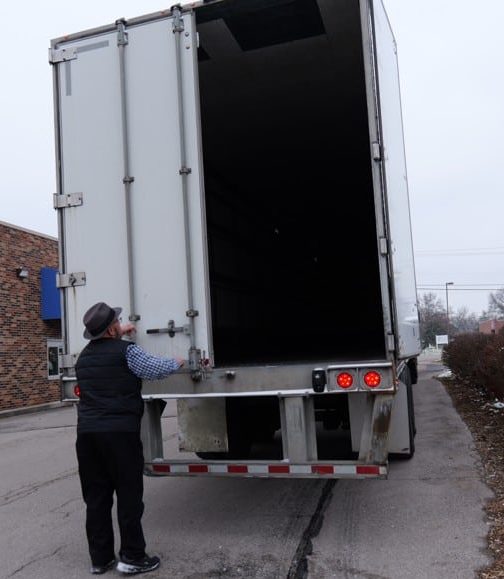
A truck that delivers a full load and drives back empty still burns fuel on the way home. It just doesn't earn anything doing it.

That's the quiet math behind every route: some miles create value, and some only create cost. According to ATRI, the trucking industry's own nonprofit research institute, empty (deadhead) miles account for roughly 16.7% of all industry mileage in its most recent benchmarking report. Roughly one out of every six miles a truck runs carries no revenue-generating freight at all, while still burning fuel, adding wear, and consuming a driver's time.

For automotive logistics, that distinction matters. The more visibility an operation has into where equipment is, where vehicles need to go, and what is likely to happen next, the more opportunities there are to make better decisions before an empty mile occurs.

That's where technology becomes more than a tracking tool. Real-time visibility can help operations identify exceptions early enough to respond, rather than simply documenting what already happened.

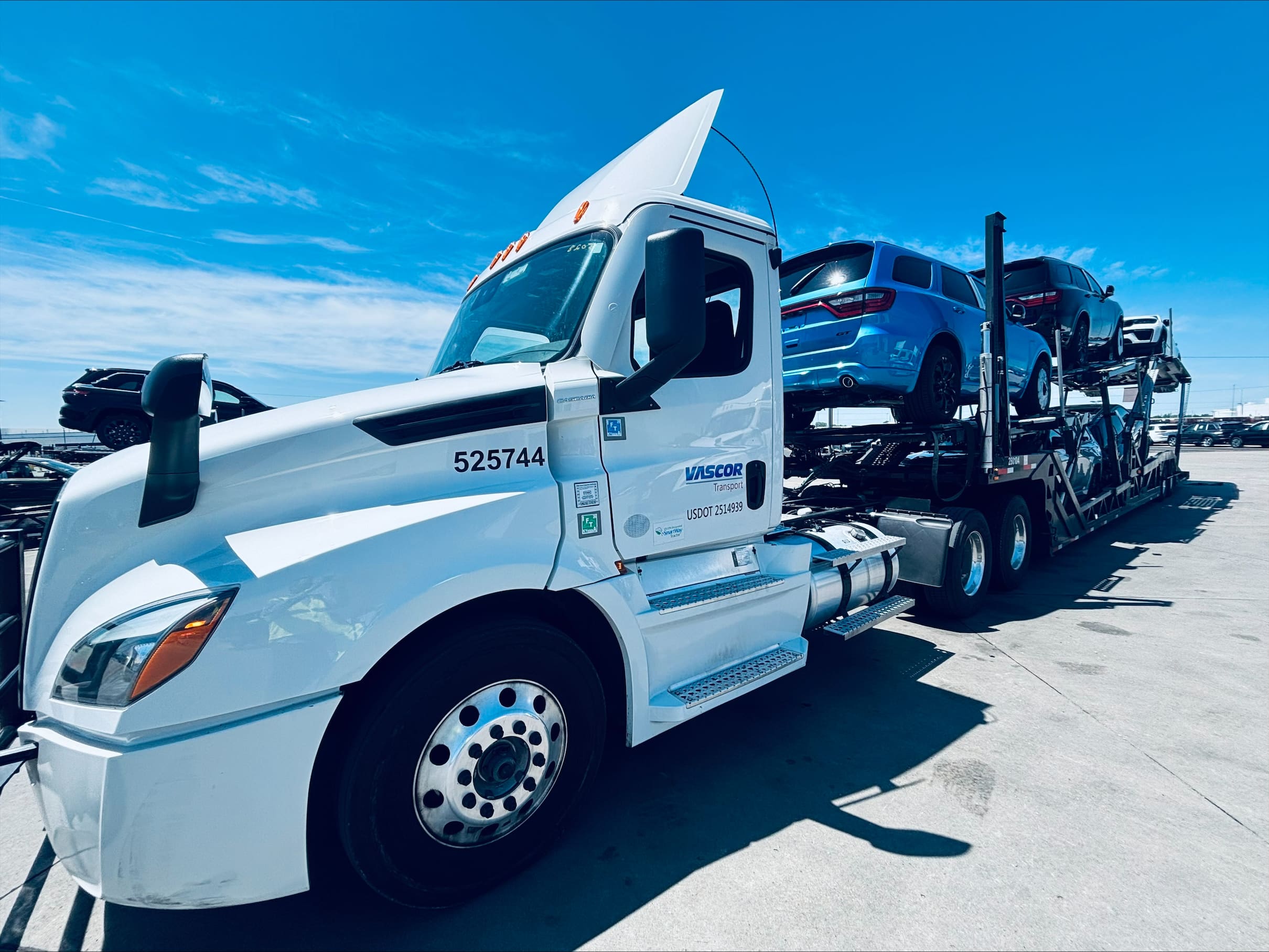
At VASCOR, Customer Service Center tracking is built around that principle: knowing where a truck is matters, but knowing early enough to do something about it matters more.

Fuel Doesn't Just Affect the Truck

Fuel can represent a significant portion of a carrier's operating cost, which means changes in diesel prices can quickly change the economics of a move.

That volatility has been hard to ignore in recent weeks. The U.S. Energy Information Administration's weekly survey put the national average on-highway diesel price at $5.652 per gallon for the week of August 24, 2026, up from $5.454 the week before, and up sharply from $3.708 a year earlier.

Applied through the U.S. Department of Energy's own Atlas fuel-surcharge reference table, built specifically for truckload freight and not less-than-truckload, a diesel price of $5.454/gal corresponds to a truckload surcharge of $0.65 per mile. Other truckload providers use their own benchmarks, baselines and mileage assumptions, so the exact figure varies by contract, but the underlying mechanism is the same.

Recent reporting has also highlighted how the diesel market is being affected by a global shortage of refinery capacity, with higher diesel costs beginning to flow through transportation and other industries.

Fuel volatility doesn't stay at the fuel pump. It moves through the transportation network, affecting carrier operating costs, transportation margins, freight pricing, shipper budgets, and capacity decisions.
The Cost of an Unclear Formula

A fuel surcharge is supposed to create a way to manage volatility. But if the benchmark, base price, mileage assumption or reset timing isn't clearly understood, the surcharge can become another source of uncertainty.

That matters because transportation decisions rarely happen in isolation. A change in fuel cost can influence carrier economics. Carrier economics can influence capacity decisions. Capacity can influence rates and service.

So a conversation that starts with "Diesel went up" can eventually become "What will it cost to move this freight?" and then "Will the capacity we need still be available?"

That's why fuel strategy is ultimately a transportation strategy.
The Cars Are Going Electric. The Trucks Hauling Them Mostly Still Aren't.

Here's a strange twist in finished-vehicle logistics: an increasing share of what we haul is changing its power source, while much of the equipment hauling it still relies on diesel.

That transition isn't as simple as replacing one fuel with another. Charging infrastructure, route range, facility power capacity and equipment availability all become part of the planning equation.

The same is true for alternative fuels. Renewable diesel can be used in existing diesel engines and infrastructure when the fuel meets applicable specifications and the equipment manufacturer permits it.

Biodiesel compatibility depends on the blend and the specific engine. Hydrogen and battery-electric trucks introduce a different set of infrastructure, range and facility considerations.

The interesting question isn't which fuel wins. It's how logistics adapts when the answer changes.


The People Behind Every Mile

A fuel gauge shows what's left in the tank. It doesn't show everything that went into getting the vehicle there.

It doesn't show the dispatcher who found a better solution. The operations team that caught an exception. The driver who safely completed the move. The technology that provided visibility. Or the planner who eliminated an unnecessary mile before it ever happened.

Fuel gets the truck moving. People, planning, technology, and execution determine where that movement goes. That's what makes logistics more than transportation.

Keep It Moving

Every mile has a cost. Every mile has a purpose. The best logistics operations understand the difference.

Because keeping things moving isn't simply about going farther. It's about making every mile count.

Sources
1. U.S. Energy Information Administration, Weekly Petroleum Status Report. National on-highway diesel price data ($5.652/gal for 8/24/26, $5.454/gal for 8/17/26, $3.708/gal for the prior year). eia.gov/petroleum/supply/weekly/pdf/wpsrall.pdf
2. U.S. Department of Energy, Atlas Fuel Surcharge Table. Truckload-specific surcharge rate ($0.65/mile at $5.454/gal). atlas.doe.gov/FuelSurcharge.aspx
3. American Transportation Research Institute (ATRI), An Analysis of the Operational Costs of Trucking. Empty/deadhead mile percentage (16.7%), most recent annual benchmarking report. Corroborated by trade press coverage in Transport Topics and FoodLogistics.
4. Reuters; Goldman Sachs commodities research (as reported via OilPrice.com); industry market analysis. Global refinery capacity constraints and elevated diesel crack spreads, August 2026.
5. U.S. Department of Energy, Alternative Fuels Data Center. Renewable diesel fuel specifications (ASTM D975) and engine/infrastructure compatibility. afdc.energy.gov/fuels/renewable-diesel
6. Cummins Inc. Engine approval for high-blend renewable diesel use in existing on-highway engines.

Contact us to decide what customized solution is right for you!

About Us

A privately held joint venture between APL Logistics® and Fujitrans Corporation,® VASCOR is infused with expertise that comes from our connection to our owners’ global supply chain solutions.

})