September 18, 2026

The Consolidation of Car Haul What a 25% Market Share Means for Finished Vehicle Logistics

When the Carrier List Gets Shorter, the Relationships on it Matter More.

North American car haul has long been fragmented: regional carriers, family-owned fleets and independent subhaulers stitched together lane by lane. That is changing.

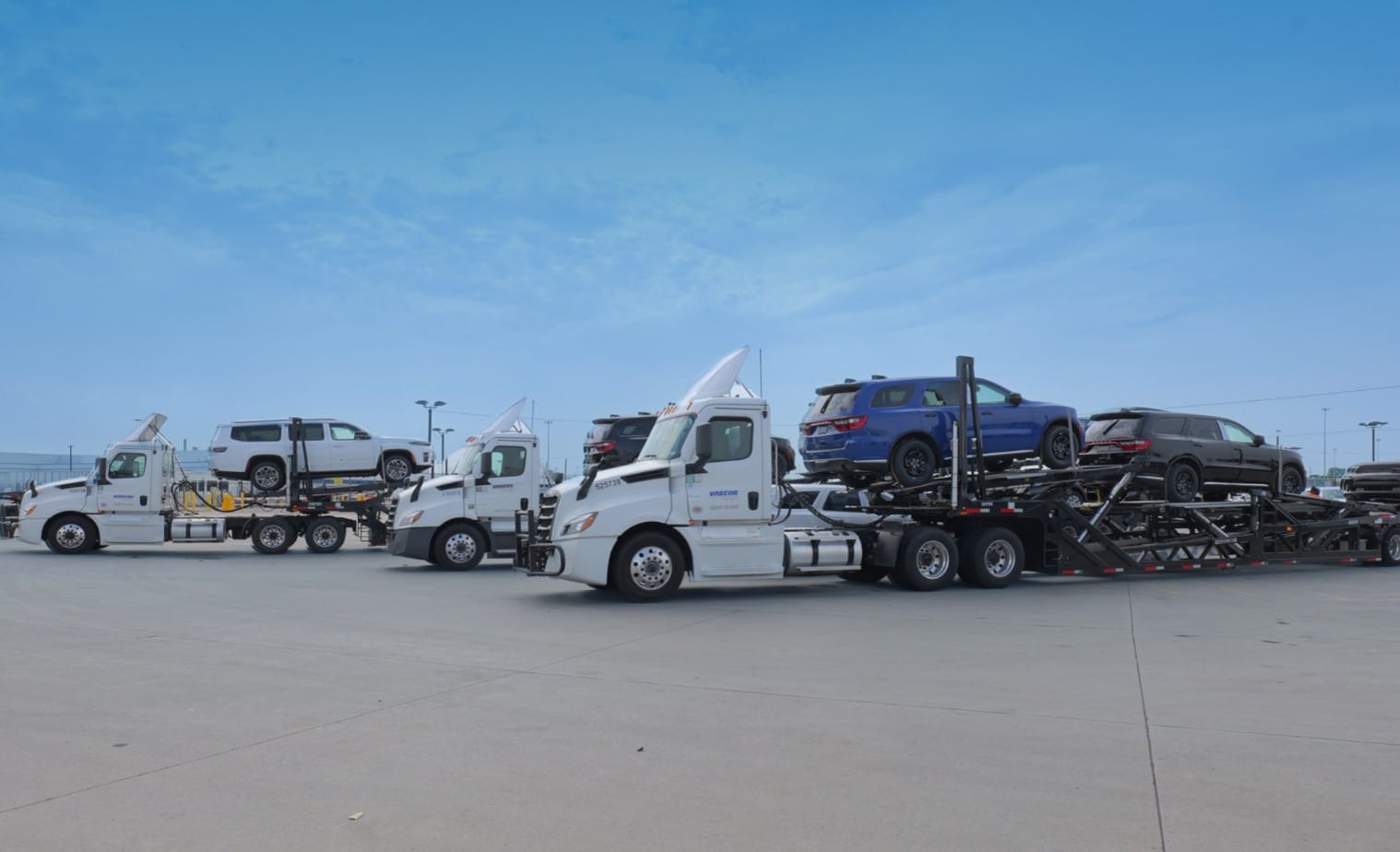
On August 13, 2026, Proficient Auto Logistics completed its $130 million acquisition of California-based Hansen & Adkins, adding roughly 725 company-owned tractor-trailers and more than $400 million in annual revenue. Proficient says the combined company now moves roughly one-quarter of the addressable new-vehicle transportation market, making it North America’s largest auto hauler; FreightWaves puts that at about 25% of new-vehicle hauling.

Consolidation on that scale does not remove risk from the finished-vehicle supply chain. It concentrates it.

Three forces are changing car haul economics at once: cost, liability and specialized capacity.

Read More: Proficient Auto Logistics, acquisition agreement (8/10/26) and completion release (8/14/26); FreightWaves, Todd Maiden (8/10/26)
Cost Pressure Is Making Scale More Important

Scale becomes more valuable when pricing adjustments lag rising operating and driver costs. Proficient reported an adjusted operating ratio of 99.5% in the second quarter of 2026, against 96.7% a year earlier, on units delivered down 8%.

That also shifts the basis of comparison: a rate describes what transportation costs, not whether the capacity behind it stays available.

Read More: Proficient Auto Logistics, Q2 2026 financial results (8/10/26); FreightWaves, Todd Maiden (8/10/26)
Liability Is Changing Carrier Selection

In May 2026, the U.S. Supreme Court held unanimously in Montgomery v. Caribe Transport II, LLC that the Federal Aviation Administration Authorization Act does not preempt this type of state negligent-hiring claim against a freight broker. Justice Barrett wrote that requiring ordinary care in selecting a carrier “concerns” motor vehicles — “most obviously, the trucks that will transport the goods” — placing it inside the statute’s safety exception.

The decision does not mandate consolidation, but it increases the legal significance of carrier selection — particularly where a carrier handles high-value inventory inside plants and yards.

Read More: U.S. Supreme Court, Montgomery v. Caribe Transport II, LLC, No. 24-1238 (5/14/26); FreightWaves, Rob Carpenter (5/14/26)
Specialized Capacity Is Not Easily Replaced

A car hauler is not easily replaced by moving a driver or tractor from another segment: the equipment is specialized, drivers need experience with it, and plant, ramp and yard access depends on relationships.

In its second-quarter results, Proficient’s chief executive said rising operating costs and the need to attract and retain drivers are “reshaping transportation economics and tightening industry capacity,” citing market exits after several quarters of sub-seasonal demand and rate pressure.

Scale and resilience are not the same thing. A large carrier supplies significant capacity, but as concentration rises, one provider’s disruption reaches a larger share of any given supply chain.

Read More: Proficient Auto Logistics, Q2 2026 financial results — Rick O’Dell (8/10/26)

What This Means for OEMs and Dealers

For OEM logistics teams and dealer networks, concentration changes the contingency question. A capacity problem could once be answered by calling another carrier; as concentration rises, that option narrows.

None of this makes large carriers a problem. National scale, company-owned equipment and coverage are measurable advantages when plants restart or production shifts. What changes is that scale and contingency are no longer the same purchase.

Volume is not the pressure point. NADA reported an August 2026 SAAR of 16.8 million units, up 1.5% year over year. The mix is what moved: battery-electric share fell from 10.1% a year earlier to 6.2%, while hybrids reached 15.7%. That matters operationally. Different powertrains can change where vehicles are produced, how they move through the network and where capacity is needed — redrawing lanes and dwell patterns even as total volume holds.

The operative question shifts: not how much capacity a supply chain holds, but how quickly it responds when the mix changes. That places weight on the fixed points between transportation moves — yards, rail ramps, inspection, processing, damage accountability and end-to-end visibility. Those functions add no trucks; they set how quickly a supply chain absorbs the loss of capacity. Resilience, on that reading, is less a property of the carrier than of the supply chain around it.

Read More: NADA, Patrick Manzi, Market Beat (9/4/26)

Key Takeaways
Sources
1. Proficient Auto Logistics, “Agrees to Acquire Hansen & Adkins” (8/10/26): proficientautologistics.com
2. Proficient Auto Logistics, “Completes Acquisition of Hansen & Adkins” (8/14/26): globenewswire.com
3. Proficient Auto Logistics, “Reports Second Quarter 2026 Financial Results,” filed with the SEC (8/10/26): sec.gov
4. U.S. Supreme Court, Montgomery v. Caribe Transport II, LLC, No. 24-1238, decided 5/14/26 (unanimous): supremecourt.gov
5. NADA, Patrick Manzi, Chief Economist, “Market Beat: New Light-Vehicle Sales SAAR Hits 16.8 Million Units in August” (9/4/26): nada.org
6. FreightWaves, Todd Maiden, “Proficient Auto Logistics’ latest deal pushes market share to 25%” (8/10/26): freightwaves.com
7. FreightWaves, Rob Carpenter, “The Supreme Court just told every freight broker that they can be sued” (5/14/26): freightwaves.com


Contact us to decide what customized solution is right for you!

About Us

A privately held joint venture between APL Logistics® and Fujitrans Corporation,® VASCOR is infused with expertise that comes from our connection to our owners’ global supply chain solutions.

})